Coffee Table Styling: 4 Core Elements for a Balanced Look
Anúncios
Coffee table styling elements work best when they combine structure, natural texture, visual interest, and practical details in one balanced arrangement.
A well-styled surface should feel intentional without becoming crowded, allowing each object to contribute to the room without overwhelming it.
Four core elements—an anchor, an organic touch, a sculptural object, and a functional accent—provide a simple framework for creating balance.
The Evolution of Coffee Table Aesthetics and Function
The coffee table has moved beyond basic utility and now often serves as a visual focal point within the living room.
Modern interior design emphasizes thoughtful placement, making each object part of a broader composition rather than random decoration.
Anúncios
This approach helps create a surface that remains attractive and functional while supporting the style of the surrounding furniture.
Defining the Core Elements
A balanced coffee table usually benefits from combining several categories of objects rather than relying on one decorative style.
Each element should have a purpose, whether providing height, texture, organization, personality, or practical usefulness within the arrangement.
Using a consistent framework makes coffee table styling elements easier to organize while reducing the risk of unnecessary clutter.
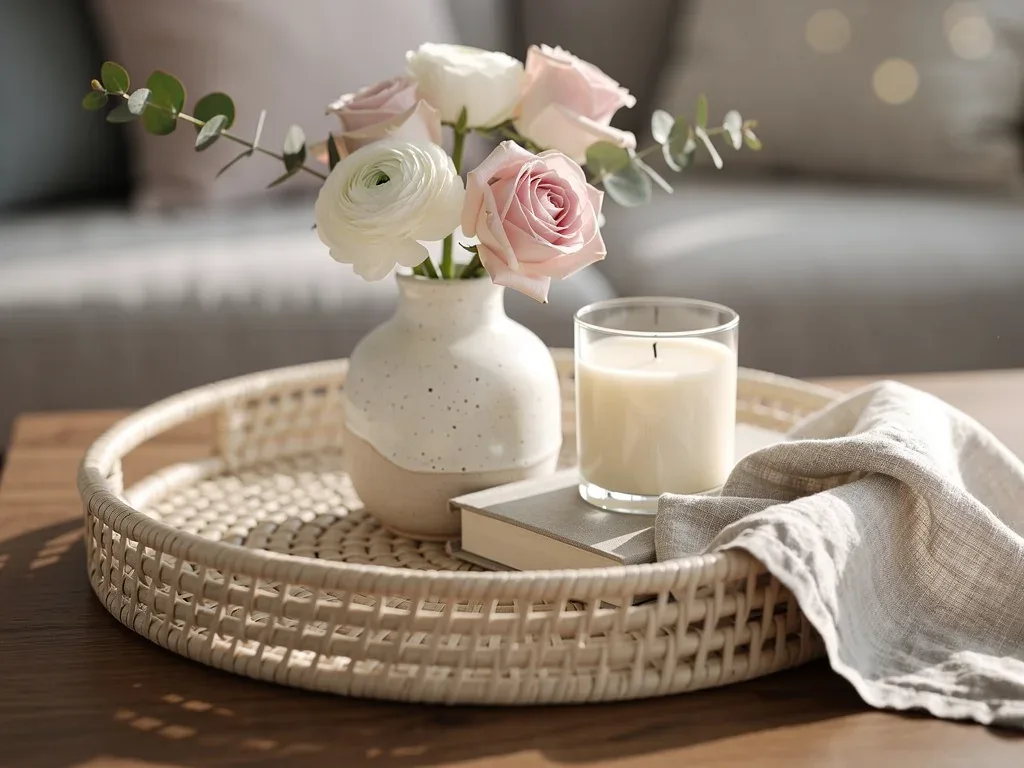
Element One: The Anchor – Trays and Books
The anchor provides visual structure by creating a clear base around which smaller decorative objects can be arranged.
Trays organize loose items, while stacked books add height, shape, and color without requiring a large amount of table space.
Together, these pieces give the arrangement a defined starting point and help connect several smaller objects into one composition.
Anúncios
Creating Visual Weight and Cohesion
A strong anchor helps prevent decorative items from appearing scattered because it establishes a clear area of visual concentration.
Books can be stacked in different sizes, while trays can group smaller objects into a single organized decorative zone.
The scale should remain proportional to the table so enough empty surface remains available for practical everyday use.
Select a tray that complements the table's material and shape.
Choose books with colors or covers that support the room's palette.
Vary book dimensions to create subtle differences in height.
Leave enough open surface to prevent the display from feeling crowded.
Element Two: The Organic Touch – Plants and Florals
Plants, flowers, and branches introduce natural forms that soften the harder lines of books, trays, and furniture.
Greenery also adds color and texture while making the arrangement feel less static and more connected to the surrounding room.
The right organic element can be minimal or expressive depending on table size, personal style, and the visual weight of other objects.
Injecting Life and Color into Your Arrangement
A small plant works well on compact tables, while larger surfaces can accommodate a vase or broader floral arrangement.
Height matters because overly tall arrangements can block sightlines between people seated on opposite sides of the table.
Planters and vases also contribute to the design, making their material, shape, and color part of the overall composition.
Choose plants that fit the available light and maintenance level.
Vary natural textures without overcrowding the surface.
Use seasonal flowers when you want an easy visual refresh.
Select planters or vases that complement surrounding materials.
Element Three: The Sculptural Object – Art and Intrigue
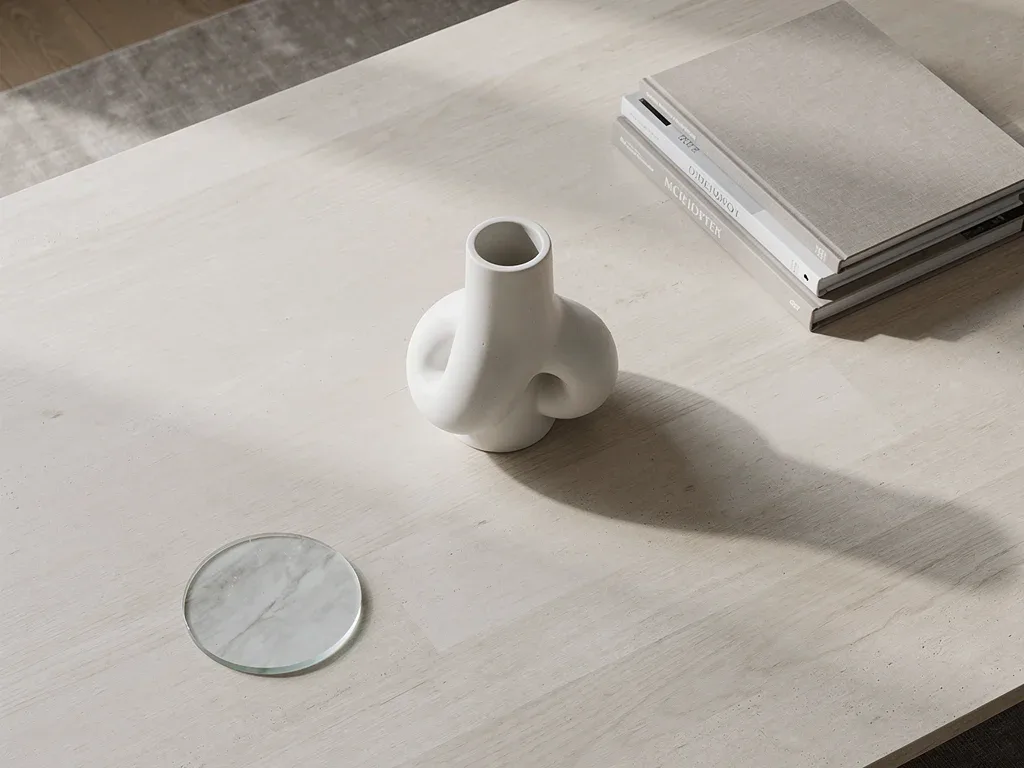
A sculptural object introduces a distinctive shape or texture that prevents the coffee table from feeling overly predictable.
This can include pottery, a small artwork, a decorative object, or another piece that reflects the homeowner's personal style.
The strongest choice creates interest without dominating the entire arrangement or making surrounding elements feel secondary.
Adding Character and Visual Interest
Sculptural pieces work particularly well when their shape contrasts with the straight lines of books, trays, or rectangular tables.
Objects with unusual materials or meaningful stories can also make the arrangement feel more personal rather than purely decorative.
Positioning should consider nearby items so the piece has enough space around it to remain visually distinct.
Choose an object that reflects your personal aesthetic.
Use texture or material contrast to create visual interest.
Keep the scale appropriate for the available surface.
Allow enough surrounding space for the object to stand out.
Element Four: Functional Accents – Candles and Coasters
Functional accents combine everyday usefulness with decoration, helping the coffee table remain practical instead of becoming a static display.
Candles can add warmth and atmosphere, while coasters protect the surface and remain ready for regular use.
These smaller coffee table styling elements are most effective when they support the larger arrangement rather than competing for attention.
Balancing Utility with Decorative Flair
Functional pieces should remain accessible, especially when the coffee table is used regularly for drinks, books, or other everyday items.
Candles can be grouped within a tray, while coasters can be stacked neatly or positioned near the most frequently used seating areas.
Choosing materials that coordinate with the room keeps these practical objects visually integrated with the rest of the display.
Select candles with holders that suit the room's overall style.
Choose coasters that complement nearby materials and colors.
Vary candle heights carefully to avoid visual clutter.
Keep practical items within easy reach for everyday use.
Integrating Scale and Proportion for Visual Harmony
Scale determines whether individual objects feel properly related to the coffee table and to one another within the arrangement.
Large objects can overwhelm a small table, while very small decorations may disappear visually when placed on a broad surface.
Balancing height, width, and negative space creates a stronger composition than simply adding more objects to fill empty areas.
The Rule of Three and Layering Techniques
Grouping objects in threes is a common design approach because uneven groupings often create a more relaxed visual rhythm.
Layering adds depth by combining items at different heights, such as books supporting a smaller decorative object or candle.
These techniques are useful guidelines rather than strict rules, so they should always be adjusted to fit the table and room.
Experiment with odd-numbered groupings when they suit the arrangement.
Vary height and texture to create visual depth.
Use trays to define smaller decorative zones.
Preserve negative space for a cleaner overall appearance.
Maintaining Balance and Flow in Your Living Space
The coffee table should visually connect with surrounding furniture rather than appearing as an isolated decorative surface in the room.
Repeating colors, materials, or textures from nearby seating and decor can make the arrangement feel more naturally integrated.
Practical circulation also matters, so the styling should never make the table difficult to use or obstruct movement around it.
Adapting Your Style to Current Trends
Current trends can influence materials and colors, but the most flexible coffee table arrangements rely on easily replaceable decorative pieces.
Natural materials, handmade objects, vintage pieces, and personal mementos can make a contemporary arrangement feel warmer and more individual.
Refreshing only a few coffee table styling elements allows the space to evolve without requiring a complete redesign.
Refresh smaller decorative items when you want a seasonal change.
Include personal objects that add character to the arrangement.
Coordinate accents with the broader living room color palette.
Keep enough open space for practical everyday use.
Creating a Balanced Arrangement Step by Step
Start with the largest anchor piece because it establishes the area where the rest of the arrangement will develop.
Add an organic element next, then introduce one sculptural piece that provides contrast in shape, texture, or visual weight.
Finish with practical accents and remove anything that makes the composition feel crowded or interferes with normal use.
Editing the Final Arrangement
Viewing the table from different seating positions can reveal whether one object appears too dominant or another disappears completely.
Removing an item is often more effective than adding another when the arrangement feels visually busy or difficult to understand.
The final display should have enough variety to feel interesting while still maintaining clear areas of open surface.
Matching Styling to Different Coffee Table Shapes
The shape of a coffee table affects how objects should be grouped because rectangular, round, and square surfaces create different visual boundaries.
Rectangular tables often support several defined zones, while round tables usually benefit from a more centralized arrangement.
Square tables can accommodate symmetrical or offset groupings depending on the size of the surface and nearby seating configuration.
Adjusting Placement for Shape and Size
On long rectangular tables, distribute visual weight across the surface instead of concentrating every object at one end.
Round tables work well with compact groupings that echo the table's central geometry and preserve comfortable access from several directions.
Regardless of shape, the arrangement should remain proportional and leave enough room for the table to function comfortably.
Core Element | Brief Description |
|---|---|
The Anchor | Trays and stacked books establish structure and visual weight. |
Organic Touch | Plants and flowers introduce natural texture, color, and softness. |
Sculptural Object | Decorative art pieces create personality and visual contrast. |
Functional Accent | Candles and coasters combine usefulness with decorative detail. |
Frequently Asked Questions About Coffee Table Styling
What should I consider when choosing a coffee table? ▼
Consider size, height, shape, material, available floor space, and how the table will function alongside the sofa and surrounding furniture.
How can I prevent a coffee table from looking cluttered? ▼
Use fewer objects, group small items inside trays, vary heights carefully, and preserve enough negative space for practical use.
Can I mix different decorating styles? ▼
Yes. Different styles can work together when they share common colors, materials, shapes, or another visual connection that creates cohesion.
What is the rule of three in coffee table styling? ▼
It is a design guideline that groups three objects or visual elements together to create an arrangement that often feels naturally balanced.
How often should I refresh my coffee table decor? ▼
There is no required schedule, but changing a few small objects seasonally can refresh the room without replacing the entire arrangement.
Looking Ahead: Thoughtful Styling That Lasts
Well-balanced coffee table styling elements rely more on proportion, usefulness, and visual relationships than on constantly changing design trends.
An anchor, organic accent, sculptural object, and functional detail provide a flexible foundation that can adapt to many interior styles.
By editing carefully and preserving open space, homeowners can create a coffee table that feels intentional, practical, and visually connected to the room.