Treasury Bills vs. 5-Year Corporate Bonds: Yields Over 5.1%
Anúncios
Locking in yields above 5.1% requires weighing the bulletproof safety of ultra-short government debt against the fixed-income longevity of mid-term corporate debt. Comparing Treasury Bills vs. 5-Year Corporate Bonds helps income-focused investors choose between near-term cash flexibility and locking in higher yields for the long haul.
Short-term sovereign paper eliminates default risk and state income taxes, making it an ideal haven for capital preservation during high-interest-rate environments. However, moving further out on the credit curve into five-year corporate debt lets you secure elevated coupon payouts long before potential rate cuts erode short-term yields.
Evaluating your tolerance for credit risk, duration sensitivity, and tax impact is key to structuring an optimal fixed-income portfolio. Here is how to strategic balance government paper and corporate debt to maximize your returns.
Understanding the Current Fixed Income Landscape
The current economic environment presents a unique opportunity for fixed income investors, with both Treasury Bills and 5-Year Corporate Bonds offering compelling yields. This has prompted a critical examination of how best to allocate capital to maximize returns while managing risk.
Investors are closely analyzing the nuances of each instrument, considering factors such as credit quality, liquidity, and interest rate sensitivity. The goal is to identify optimal strategies for achieving or surpassing the 5.1% yield threshold that many are targeting.
Anúncios
Recent market movements underscore the importance of informed decision-making, as global economic indicators and central bank policies continue to influence bond markets. Understanding these dynamics is essential for successful fixed income allocation.
Recent data helps clarify the scope and sequence of events. Markets and local communities reacted as information became public, with agencies coordinating responses under established protocols.
Treasury Bills: Safety and Liquidity
Treasury Bills, or T-Bills, are short-term debt obligations of the U.S. government, generally maturing in one year or less. They are considered among the safest investments globally due to the full faith and credit backing of the U.S. Treasury.
Their appeal lies in their high liquidity and minimal default risk, making them a cornerstone for conservative investors. Currently, certain maturities of T-Bills are offering attractive yields, sometimes approaching or exceeding the 5.1% mark, particularly in the shorter end of the curve.
This makes them an excellent option for parking cash with a favorable return, especially for those seeking capital preservation and easy access to funds. The predictability of T-Bill returns is a significant draw for many.
Examining 5-Year Corporate Bonds for Enhanced Yields
Conversely, 5-Year Corporate Bonds offer the potential for higher yields compared to T-Bills, compensating investors for taking on additional credit risk. These bonds are issued by companies to raise capital, with maturities typically ranging from one to ten years.
The current market sees a variety of corporate bonds from investment-grade companies offering yields competitive with, or even above, the 5.1% target. This makes them attractive for investors willing to accept a modest increase in risk for greater potential returns.
Anúncios
Evaluating corporate bonds requires a thorough analysis of the issuing company's financial health, credit rating, and industry outlook. A diversified approach across different sectors and issuers can mitigate some of the inherent risks.
Credit Risk and Due Diligence
Investing in corporate bonds necessitates careful consideration of credit risk, which is the possibility that the issuer may default on its debt obligations. This risk is typically reflected in the bond's yield, with higher yields often indicating higher perceived risk.
Investors must conduct thorough due diligence, examining credit ratings from agencies like Moody's, S&P, and Fitch. These ratings provide an independent assessment of an issuer's ability to meet its financial commitments, guiding investment decisions.
Understanding the specific covenants of a corporate bond, such as call provisions or seniority in the capital structure, is also crucial. These details can significantly impact the bond's performance and an investor's overall return.
Yields Exceeding 5.1%: A Detailed Comparison
The pursuit of yields exceeding 5.1% requires a detailed comparison between Treasury Bills and 5-Year Corporate Bonds. While T-Bills offer unparalleled safety, their yields can fluctuate based on Federal Reserve policy and short-term market dynamics.
Corporate bonds, particularly those from strong investment-grade companies, often provide a yield spread over Treasuries, reflecting their higher risk profile. This spread can be the key to achieving the desired 5.1% or higher yield.
The decision to favor one over the other, or to blend both, hinges on an investor's individual risk tolerance, investment horizon, and specific income needs. A balanced approach often involves diversifying across both asset classes.
Interest Rate Sensitivity Considerations
Both Treasury Bills and 5-Year Corporate Bonds are sensitive to interest rate changes, though to varying degrees. T-Bills, with their shorter maturities, generally exhibit lower interest rate sensitivity compared to longer-term bonds.
A 5-year corporate bond, having a longer duration, will typically experience greater price fluctuations in response to interest rate movements. When rates rise, bond prices fall, and vice versa, impacting total returns.
Investors should consider their outlook on future interest rates when deciding between these instruments. If rates are expected to rise, shorter-duration assets like T-Bills might be preferred to minimize capital depreciation.
Allocating Fixed Income for Optimal Performance
Strategic allocation between Treasury Bills and 5-Year Corporate Bonds is paramount for achieving optimal fixed income performance. This involves evaluating current market conditions, economic forecasts, and personal financial goals.
For investors prioritizing capital preservation and liquidity, a higher allocation to T-Bills may be appropriate. Those seeking enhanced income and willing to accept some credit risk might lean more towards corporate bonds.
A diversified fixed income portfolio often includes a mix of both, balancing safety with yield potential. This approach helps mitigate risks associated with any single asset class or market segment.
For now, practical effects are concentrated in specific areas, while broader impacts depend on future decisions and compliance with new guidelines.
Building a Resilient Portfolio
Building a resilient fixed income portfolio involves more than just chasing the highest yields; it requires a thoughtful integration of various bond types. The interplay between Treasury Bills and 5-Year Corporate Bonds can create a robust foundation.
Investors can utilize T-Bills for their short-term cash needs and as a defensive allocation during periods of market uncertainty. Meanwhile, corporate bonds can provide a steady stream of income and potential for capital appreciation.
Regular rebalancing of the portfolio ensures that the allocation remains consistent with the investor's risk profile and market outlook. This proactive management is key to navigating evolving economic landscapes.
Market Dynamics and Economic Outlook
The current market dynamics, influenced by inflation, Federal Reserve policy, and global economic growth, play a significant role in the appeal of both Treasury Bills and 5-Year Corporate Bonds. Understanding these forces is crucial for making informed decisions.
Recent inflation data and central bank statements provide valuable insights into the likely trajectory of interest rates. These factors directly impact the yields offered by fixed income instruments, affecting their attractiveness to investors.
The overall economic outlook, including GDP growth and employment figures, also influences corporate credit quality. A strong economy generally supports corporate earnings and reduces the likelihood of defaults, benefiting corporate bondholders.
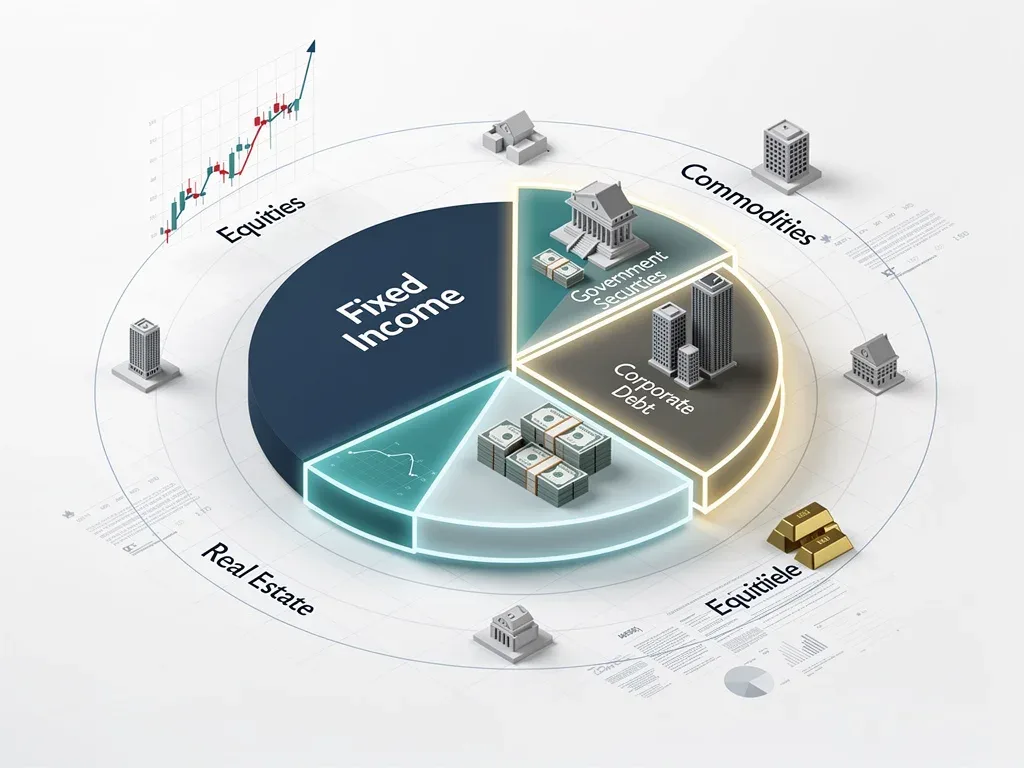
Diversification Beyond Traditional Fixed Income
While the focus remains on Treasury Bills vs. 5-Year Corporate Bonds, investors should also consider diversification beyond these traditional fixed income options. Exploring other asset classes can further enhance portfolio resilience and return potential.
This might include allocations to municipal bonds for tax-exempt income, international bonds for global diversification, or even alternative credit strategies. A holistic approach can optimize overall portfolio performance.
However, any diversification strategy must align with the investor's core objectives and risk tolerance. The primary goal remains to achieve target yields while maintaining a prudent level of risk exposure across the portfolio.
For now, practical effects are concentrated in specific areas, while broader impacts depend on future decisions and compliance with new guidelines.
Monitoring Economic Indicators
Continuous monitoring of key economic indicators is essential for effective fixed income investing. Data points such as inflation rates, employment reports, and central bank communications can signal shifts in market conditions.
These indicators provide context for yield movements and help investors anticipate potential changes in monetary policy. Staying informed allows for timely adjustments to fixed income allocations, protecting capital and optimizing returns.
For example, an unexpected rise in inflation might suggest that the Federal Reserve could increase interest rates, potentially impacting bond prices. Proactive monitoring helps investors react strategically to such developments.
Key Comparison | Description |
|---|---|
Safety & Risk | Treasury Bills offer lower risk, while corporate bonds carry credit risk. |
Yield Potential | Corporate bonds generally offer higher yields for increased risk. |
Liquidity | Treasury Bills are highly liquid; corporate bond liquidity varies. |
Interest Rate Sensitivity | T-Bills are less sensitive; 5-year corporate bonds more so. |
Frequently Asked Questions About Fixed Income Allocation
What are the primary advantages of Treasury Bills?▼
Treasury Bills offer unparalleled safety due to being backed by the U.S. government, making them nearly risk-free. They are also highly liquid, providing investors easy access to their funds if needed. Their short maturities reduce interest rate risk, making them ideal for capital preservation.
Why might an investor choose 5-Year Corporate Bonds over Treasury Bills?▼
Investors typically choose 5-Year Corporate Bonds for their higher yield potential compared to Treasury Bills. This additional yield compensates for the increased credit risk associated with corporate debt. They can provide a more substantial income stream for those willing to accept a moderate level of risk.
How do current market conditions affect yields for both?▼
Current market conditions, including inflation rates and Federal Reserve monetary policy, significantly impact yields. When the Fed raises rates, yields on both instruments tend to rise. Economic growth and corporate health also influence corporate bond yields, creating a dynamic environment for fixed income.
What role does credit rating play in corporate bond selection?▼
Credit ratings are crucial for corporate bond selection as they assess an issuer's ability to repay debt. Higher-rated bonds (investment grade) carry lower default risk but offer lower yields, while lower-rated bonds (junk bonds) provide higher yields but greater risk. It helps investors gauge the risk-reward tradeoff.
Is it advisable to combine Treasury Bills and Corporate Bonds in a portfolio?▼
Yes, combining Treasury Bills and 5-Year Corporate Bonds often creates a balanced fixed income portfolio. T-Bills provide safety and liquidity, while corporate bonds offer enhanced yields. This diversification helps manage risk and optimize returns, aligning with various investment objectives and risk tolerances effectively.
Perspectives
The ongoing analysis of Treasury Bills vs. 5-Year Corporate Bonds continues to be a central topic for investors. The current environment offers attractive opportunities, but also necessitates a clear understanding of market dynamics and individual risk profiles.
Future Federal Reserve decisions and economic data releases will remain critical in shaping the performance of these instruments, requiring continuous monitoring and strategic adjustments to portfolio allocations.