Fluted Wood vs. Limewash: Modern Fireplace Surrounds Compared
Anúncios
Fluted wood vs limewash creates two very different approaches to modern fireplace surrounds, with one emphasizing architectural lines and the other a softer mineral-inspired surface.
Both can transform a plain fireplace wall into a focal point, but appearance should never be considered independently from heat clearances, substrate compatibility and installation requirements.
The best choice depends on the fireplace type, surrounding materials, desired texture, maintenance expectations and whether combustible finishes are permitted in the planned location.
How Fluted Wood Changes a Fireplace Surround
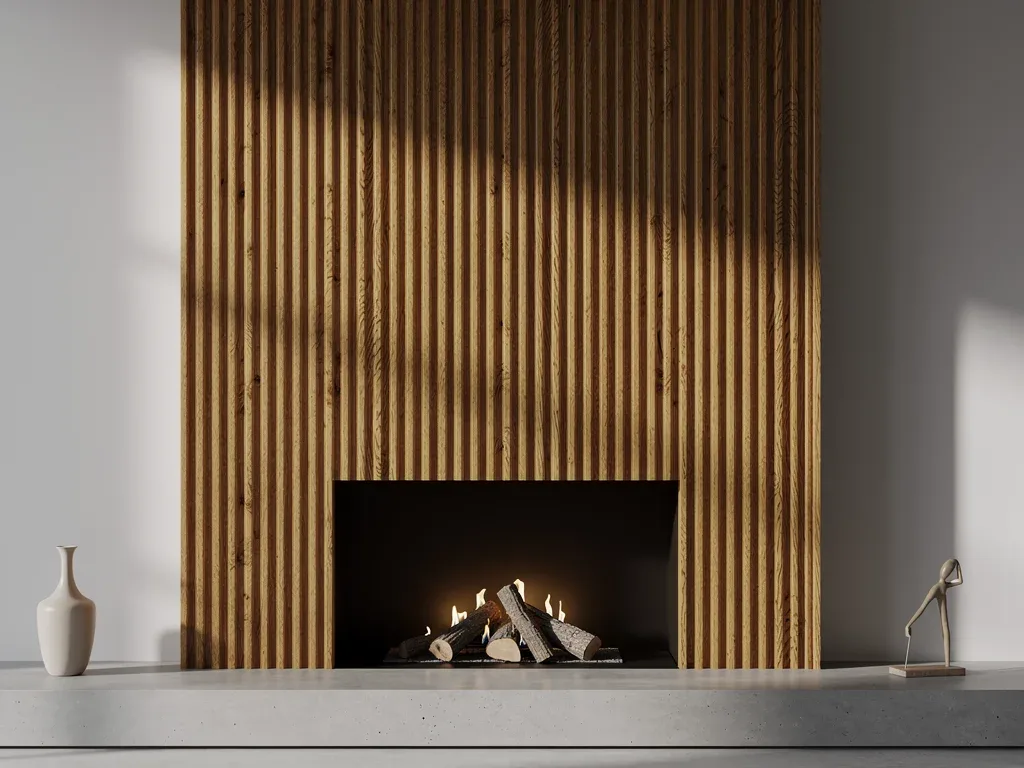
Fluted wood introduces repeated vertical grooves that create depth, rhythm and a strong architectural presence around a fireplace.
The grooves catch light differently throughout the day, producing narrow highlights and shadows that make even a neutral wall visually active.
Anúncios
Depending on the wood species and finish, the result can feel contemporary, Scandinavian, mid-century or more traditionally crafted.
Vertical Lines Can Make the Wall Feel Taller
Fluting naturally directs the eye vertically, which can make a fireplace wall appear taller and more prominent within the room.
This effect works especially well on floor-to-ceiling fireplace features where the designer wants the surround to emphasize ceiling height.
Wider flutes generally create a calmer architectural rhythm, while narrower repeated grooves can introduce a denser and more decorative texture.
Wood Adds Warmth to Minimal Interiors
Modern living rooms frequently use stone, glass, metal and painted drywall, which can leave a fireplace composition feeling visually hard.
Natural wood introduces grain and tonal variation that softens these materials without requiring additional decorative objects around the hearth.
Lighter oak-like finishes can support a restrained modern aesthetic, while darker stains produce a stronger and more dramatic focal point.
Anúncios
Wood Near a Fireplace Requires Careful Planning
Fluted wood is combustible, so its location cannot be determined solely by the dimensions that look best in a rendering or inspiration photograph.
Required clearances vary according to whether the fireplace is masonry, gas, wood-burning, electric or a listed factory-built appliance.
The installation manual, adopted local building code and any requirements from the authority having jurisdiction should guide the final placement.
Do Not Assume Every “Zero-Clearance” Fireplace Allows Wood Everywhere
A listed fireplace may be designed for installation near combustible framing while still imposing specific restrictions on finishing materials around its visible opening.
The manual can specify different clearances above, beside or in front of the unit and may distinguish between projecting trim and flush finishes.
That means the phrase “zero clearance” should never be interpreted as permission to install decorative wood directly against any part of the fireplace face.
Masonry Fireplaces Also Have Combustible-Clearance Rules
Model building codes contain specific requirements governing combustible trim and other woodwork surrounding traditional masonry fireplace openings.
For example, combustible trim is generally restricted from the immediate opening, with additional limits applying to materials that project farther from the fireplace face.
Because adopted codes can differ by jurisdiction, those model-code dimensions should be verified locally rather than copied blindly into every project.
Material Choice Matters With Fluted Panels
Not every product marketed as a fluted wood panel is made from solid lumber, and the underlying construction can significantly affect its performance.
Products may use solid wood, plywood, MDF, veneered composites or acoustic backing materials that react differently to heat and installation conditions.
Always identify the complete panel assembly rather than evaluating safety or durability based only on the decorative veneer visible from the room.
MDF and Composite Panels Need Extra Attention
Decorative panels built from MDF or similar fiber products remain combustible even when their surface visually resembles solid hardwood.
Adhesives, backing materials and factory finishes can also have temperature or installation limitations specified by the manufacturer.
A panel that works beautifully on an ordinary feature wall may therefore be inappropriate within a restricted fireplace-clearance zone.
Solid Wood Is Not Automatically Heat-Safe
Choosing hardwood instead of MDF can improve resistance to ordinary dents and wear, but it does not make the material noncombustible.
Repeated exposure to excessive heat can dry, discolor, warp or damage wood even when it never comes into direct contact with flame.
Proper clearance remains necessary regardless of whether the selected species is oak, walnut, ash or another premium hardwood.
What Limewash Adds to a Fireplace Wall
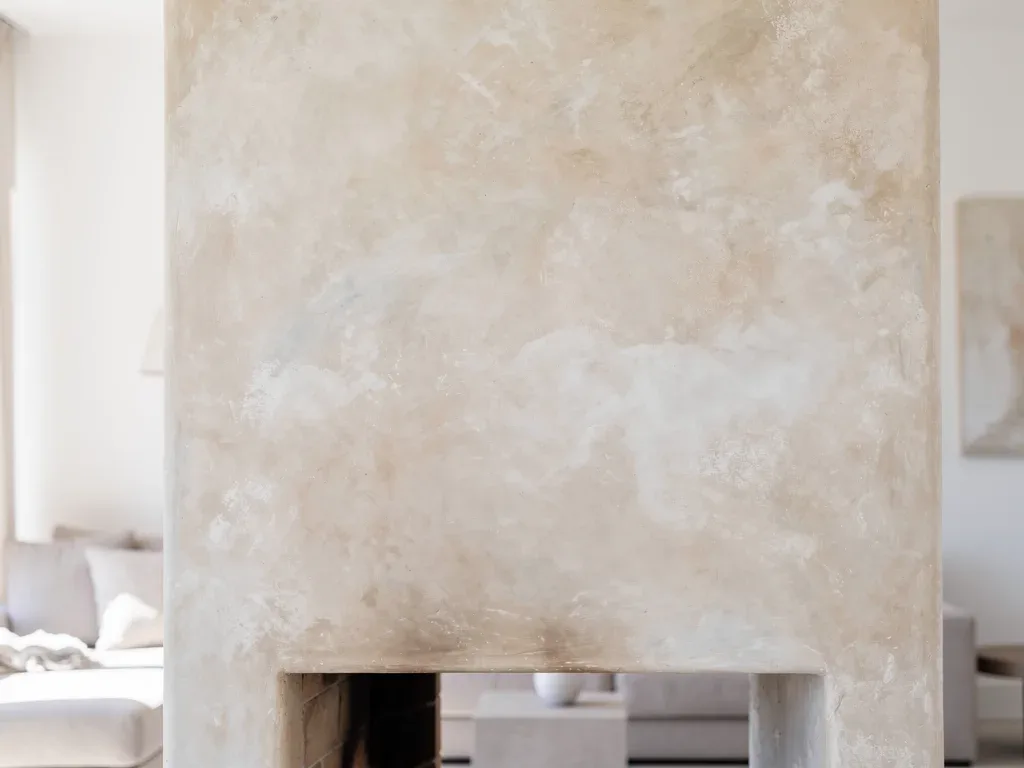
Limewash creates a softer visual texture built from subtle tonal variation rather than physical grooves projecting from the wall.
The surface often appears matte and slightly clouded, with brush movement creating natural variation across larger uninterrupted areas.
This makes limewash particularly effective when the fireplace is meant to feel integrated into the architecture rather than framed by decorative paneling.
Limewash Creates Movement Without Heavy Texture
The finish responds to ambient light through gentle tonal shifts that can make a simple wall appear layered without adding physical depth.
Unlike conventional uniform paint, slight variation between strokes is part of the intended character rather than necessarily an application defect.
The final appearance can range from subtle and contemporary to intentionally aged depending on color, application technique and number of coats.
The Color Palette Often Favors Natural Neutrals
Warm whites, mineral grays, clay tones, muted beige and soft earthy colors work naturally with the irregular appearance associated with limewash.
These shades can complement stone, timber, linen and other natural materials without requiring the fireplace itself to become visually dominant.
Darker limewash colors can also create dramatic fireplaces, although stronger pigments make application variation and surface preparation more noticeable.
Limewash Depends Heavily on the Substrate
Traditional limewash performs most naturally on compatible porous mineral surfaces because the coating works differently from conventional film-forming paint.
Masonry, plaster and certain prepared mineral surfaces can be appropriate, while drywall or previously painted walls may require a compatible primer or specialized system.
The product manufacturer's preparation instructions should therefore be checked before applying limewash to an existing fireplace surround.
Do Not Assume Limewash Makes the Wall Noncombustible
A thin mineral finish does not automatically change the fire classification of combustible construction located underneath it.
If limewash is applied over drywall, wood or another assembly, the safety of the fireplace surround still depends on the complete wall construction.
Clearance requirements should therefore be evaluated according to the fireplace and substrate rather than the decorative topcoat alone.
Surface Preparation Controls the Final Appearance
Uneven absorption, glossy coatings, repairs and incompatible primers can cause limewash to behave differently across the same fireplace wall.
Preparing the substrate according to the chosen product helps produce controlled variation instead of random patches caused by inconsistent absorption.
Testing a small section is particularly useful because limewash often changes appearance as it dries and cures.
Fluted Wood vs. Limewash Creates Very Different Texture
The most obvious difference between the two finishes is whether texture comes from physical geometry or from tonal variation across a mostly flat surface.
Fluted wood creates measurable depth through ridges and recesses, while limewash relies primarily on brush movement, mineral character and changing color density.
This difference affects not only appearance but also the way furniture, artwork and architectural elements interact with the fireplace wall.
Choose Fluted Wood for Strong Architectural Definition
Fluted panels work well when the fireplace should function as an architectural element with clear boundaries and deliberate vertical geometry.
The material can connect visually with built-in cabinetry, shelving or existing wood furniture to make the entire room feel more coordinated.
It is particularly effective in interiors where clean lines need additional warmth without introducing patterned wallpaper or decorative molding.
Choose Limewash for a Softer Backdrop
Limewash is often stronger when the room already contains prominent furniture, stone, artwork or architectural elements that deserve visual priority.
Its subtle movement gives the fireplace depth while allowing the surrounding composition to remain calm and relatively minimal.
The finish can also bridge modern furnishings with more rustic or aged materials without making the wall feel overly decorative.
Light Behaves Differently on Each Surface
Fluted wood creates actual shadows because its raised and recessed sections physically change the angle at which light reaches the surface.
Limewash creates a softer impression of depth through differences in tone and reflectivity rather than strong physical shadow lines.
The amount and direction of daylight in the room can therefore change which finish produces the more interesting fireplace throughout the day.
Fluting Can Look Dramatic With Side Lighting
Natural light entering perpendicular to the grooves emphasizes every ridge and can make the panel appear more sculptural.
Wall washers and directional architectural lighting can create a similar effect at night when positioned carefully.
Strong frontal lighting produces a flatter appearance because it reduces the contrast between the raised and recessed sections.
Limewash Benefits From Diffused Light
Soft daylight can reveal the gentle tonal movement in limewash without producing the sharp shadows associated with deeply textured paneling.
The effect often changes gradually as daylight moves across the room, making the finish appear warmer or cooler at different times.
Artificial lighting temperature also matters because warm and cool bulbs can noticeably alter the perceived undertone of mineral-inspired colors.
Maintenance Is Different for Each Finish
Fluted wood collects dust within grooves, making routine cleaning slightly more involved than wiping a completely flat painted surface.
Limewash does not contain grooves, but its matte appearance and porous character can make aggressive scrubbing or cleaning products inappropriate for some formulations.
Maintenance requirements should therefore be checked against the specific wood finish or limewash system rather than generalized across every product.
Fluted Wood Needs Regular Dust Removal
A soft brush attachment, microfiber cloth or other nonabrasive method can help remove dust that accumulates between vertical grooves.
Finished wood should be cleaned using products compatible with the stain, paint, oil or protective coating applied to the panel.
Harsh cleaners can alter sheen or damage the protective finish, particularly on natural wood surfaces intended to retain a low-luster appearance.
Limewash Touch-Ups Can Remain Visible
The intentionally varied nature of limewash can make minor repairs blend more naturally than they would on a perfectly uniform painted wall.
However, a fresh patch can still differ in tone from an older surrounding area depending on product, substrate and previous application technique.
Keeping leftover material and recording the original color and application method can make future repairs easier to reproduce.
Heat Exposure Should Influence the Material Decision
The temperature around a fireplace can vary greatly depending on appliance type, output, ventilation design and the geometry of the surround.
An electric fireplace with relatively low surface temperatures presents different finishing conditions from an open masonry wood-burning fireplace.
For that reason, broad statements that one decorative material is universally “fireplace safe” are not reliable enough for an actual installation.
Follow the Fireplace Manufacturer Before Design Inspiration
The installation manual should specify combustible-material clearances, facing requirements and any restrictions affecting mantels or projecting trim.
These instructions take priority over a photograph found online where the fireplace model and concealed wall construction are unknown.
If the manual is unavailable, identify the exact fireplace model before attaching new decorative material around the opening.
Cost Depends More on Execution Than the Category
Fluted wood can range from relatively affordable prefabricated panels to expensive custom-milled hardwood installed by a finish carpenter.
Limewash products may have comparatively modest material costs, but extensive preparation or specialist application can increase the labor component substantially.
The most accurate comparison therefore considers the complete installed system rather than comparing a gallon of finish with the price of one decorative panel.
Custom Wood Can Increase the Budget Quickly
Premium species, continuous grain matching, custom flute profiles and complicated transitions around shelves or mantels add fabrication and installation time.
Projects extending from floor to ceiling also require careful alignment because small deviations become obvious across long vertical grooves.
Prefabricated panels can reduce fabrication costs, although their substrates and fire-clearance suitability still need to be verified before installation.
DIY Limewash Can Reduce Labor Costs
A confident homeowner may be able to apply a compatible limewash system after learning the manufacturer's preparation and application requirements.
The intentionally varied aesthetic can be more forgiving of subtle brush differences than high-gloss conventional finishes requiring a perfectly uniform surface.
Large statement walls may still benefit from professional application when exact color development or consistency across multiple surfaces is important.
Sustainability Requires More Than Choosing a Natural Material
Both wood and lime-based finishes can fit sustainability-focused interiors, but neither should automatically be labeled environmentally superior without considering sourcing and manufacturing.
Wood performance depends partly on forestry practices, species, transportation, adhesives, backing materials and how long the installed product remains in service.
Lime-based finishes also require raw-material extraction and processing, so environmental comparisons should consider the complete product rather than marketing terminology alone.
Responsibly Sourced Wood Can Be a Strong Option
Reclaimed material or timber from credible responsible-forestry programs can help reduce some sourcing concerns associated with new decorative wood products.
Durability also matters because a finish that remains in place for decades may avoid repeated cycles of replacement and additional material consumption.
Engineered panels should be evaluated separately because their environmental characteristics also depend on adhesives, backing products and manufacturing processes.
Check the Actual Limewash Product Specification
Products marketed using terms such as limewash, mineral paint or lime-effect finish do not necessarily contain identical ingredients or perform in identical ways.
Reviewing the technical data sheet can clarify composition, recommended substrates, primer requirements, emissions information and suitable application environments.
This product-specific approach is more reliable than assuming every finish carrying a natural-sounding name has the same environmental profile.
Fluted Wood Works Well With Built-In Features
A fluted fireplace wall can visually connect with bookcases, media cabinetry and floating shelves built from similar wood tones.
Repeating the same finish selectively can make separate architectural components read as one intentional composition rather than unrelated additions.
The strongest designs usually limit repetition enough that the grooves remain an accent instead of covering every vertical surface in the room.
Transitions Need Careful Detailing
Corners, baseboards, mantels and intersections with shelving can interrupt the fluting and expose unfinished panel edges if not planned beforehand.
Designing these transitions before installation allows the groove pattern to terminate cleanly and reduces awkward narrow pieces near boundaries.
Professional detailing becomes particularly important when fluting surrounds a television, recessed niche or another feature that must remain visually centered.
Limewash Pairs Naturally With Stone and Plaster
The softer texture of limewash works well beside stone, plaster, ceramics and other materials whose appeal comes from natural variation.
A fireplace can therefore remain quiet in form while gaining enough visual depth to avoid looking like an ordinary painted drywall box.
This approach is useful in interiors influenced by Mediterranean, organic-modern, minimalist or wabi-sabi design principles.
It Can Also Work in Japandi-Inspired Rooms
Japandi interiors frequently combine restrained forms with tactile natural materials, making either wood or mineral-style finishes potentially appropriate.
A related Japandi interiors guide shows how ceramic, oak and understated textures can work together without excessive ornament.
For a fireplace, limewash can provide the quiet backdrop while furniture, timber and ceramics introduce the stronger material contrast.
Which Finish Is Better for Small Rooms?
Neither finish is automatically better for a small living room because color, scale and surrounding furniture influence perceived space as much as material choice.
Light fluted wood can provide warmth without making the room feel heavy, while pale limewash can maintain visual continuity across a compact wall.
The decision should focus on whether the room benefits more from architectural definition or from a quieter surface with minimal visual interruption.
Use Fluting Carefully in Tight Spaces
Very deep grooves and dark timber can make a small fireplace wall visually dominant, especially when the surrounding room has several other strong textures.
Shallower flutes and lighter finishes preserve the architectural effect while reducing the perceived visual weight of the paneling.
Limiting fluting to one defined section can also maintain interest without wrapping a compact room in repeated texture.
Limewash Can Keep the Wall Visually Continuous
A single limewashed surface extending around and above the fireplace can avoid the visual breaks introduced by trim or contrasting panels.
Using a tone close to adjacent walls creates subtle differentiation while maintaining a calm overall palette.
A slightly deeper shade can instead define the fireplace without adding another physical material to an already small room.
Which Option Is Easier to Change Later?
Limewash is generally a surface finish, whereas fluted wood typically involves installed paneling, fasteners, adhesives or a framing system.
Changing a limewashed look may involve preparation and recoating, while removing wood panels can require wall repair after the material is detached.
Homeowners who frequently update interiors may therefore prefer the lower physical commitment of a decorative coating.
Wood Can Still Offer Long-Term Flexibility
Some fluted wood can be refinished, stained darker or painted later when the underlying panel remains in good condition.
This allows the architectural texture to survive while the color changes alongside new furniture or room finishes.
However, refinishing narrow grooves can require considerably more labor than repainting a smooth wall.
Do Not Choose Based on Resale Claims Alone
A well-designed fireplace can improve the overall presentation of a room, but neither fluted wood nor limewash guarantees a measurable increase in home value.
Buyer preferences vary, and highly personalized finishes can appeal strongly to one person while another buyer plans to replace them immediately.
The most durable value comes from quality installation, safe construction and a design that relates coherently to the rest of the home.
Timeless Execution Matters More Than Trend Labels
Fluting and limewash both move in and out of trend discussions, but each technique has historical precedents extending well beyond current social-media styling.
A proportioned installation using appropriate materials can remain convincing even after the immediate trend cycle changes.
Choosing a finish because it works with the architecture is generally safer than reproducing an isolated inspiration image exactly.
Fluted Wood vs. Limewash at a Glance
The fluted wood vs limewash decision ultimately comes down to architectural texture versus tonal texture combined with the technical limits of the fireplace installation.
Wood offers stronger lines and physical depth, while limewash creates quieter visual movement across a comparatively flat surface.
The table below summarizes the practical differences without treating either finish as universally better for every fireplace.
Safety Requirements Come Before the Comparison
Neither material should be specified until the fireplace model, substrate, required clearances and applicable building requirements are known.
Combustible wood requires particular attention, while a limewash coating cannot make an unsuitable combustible substrate safe simply by covering it.
Once those technical conditions are resolved, aesthetics, maintenance and budget can guide the final selection.
Feature | Fluted Wood | Limewash |
|---|---|---|
Visual Texture | Physical grooves with strong light and shadow. | Soft tonal variation with minimal physical depth. |
Overall Mood | Structured, warm and architectural. | Organic, quiet and atmospheric. |
Fireplace Safety | Combustible; clearances and manufacturer requirements are critical. | Finish suitability depends on product and substrate; the coating alone does not determine fire safety. |
Maintenance | Grooves require routine dust removal and finish-appropriate cleaning. | Cleaning and touch-up methods depend on the specific limewash system. |
Installation | Requires precise panel layout, cutting and edge detailing. | Requires compatible surface preparation and controlled application technique. |
Best For | Rooms needing a stronger architectural focal point. | Rooms needing softer texture and visual continuity. |
Frequently Asked Questions About Fireplace Surrounds
Is fluted wood safe around a fireplace?
It can be used only where the fireplace manufacturer's instructions, local code and required clearances permit combustible materials in the planned location.
Can fluted wood touch the fireplace opening?
Do not assume so. Combustible-material clearance varies by fireplace type and installation, and the manufacturer's instructions should be checked before designing the surround.
Is limewash fireproof?
Limewash should not be described as making an entire wall fireproof because the safety of the assembly also depends on the substrate underneath the finish.
Can limewash be applied over drywall?
Some modern limewash systems can be used over properly prepared drywall with compatible primers, while traditional formulations may require more porous mineral substrates.
Which looks more modern, fluted wood or limewash?
Fluted wood generally creates stronger architectural geometry, while limewash produces a softer organic-modern appearance; either can suit contemporary interiors.
Which is easier to clean?
A smooth limewashed surface avoids dust-catching grooves, but cleaning methods can be limited by its finish; sealed wood may tolerate different maintenance but requires dusting between flutes.
Which is less expensive?
Costs vary by product and labor. Prefabricated fluted panels can be affordable, while custom hardwood is expensive; limewash costs depend heavily on preparation and professional application.
Can limewash be used on a gas fireplace wall?
Potentially, but compatibility should be verified with the fireplace instructions, wall substrate and the technical requirements of the selected finish.
Which finish works better with Japandi interiors?
Both can work: pale natural wood adds warmth and structure, while limewash creates the restrained mineral texture often associated with quiet, nature-focused interiors.
Does one option increase home value more?
There is no reliable universal percentage. Safe installation, material quality and integration with the overall interior matter more than choosing one fashionable surface treatment.
Conclusion
The fluted wood vs limewash comparison is ultimately a choice between pronounced architectural relief and softer tonal texture rather than a simple contest between two trends.
Fluted wood can create a warmer and more structured focal point, while limewash can make the fireplace feel calmer, more integrated and visually understated.
Whichever finish is selected, confirm the fireplace's clearance requirements and substrate compatibility first, then make the aesthetic decision within those safe technical limits.